
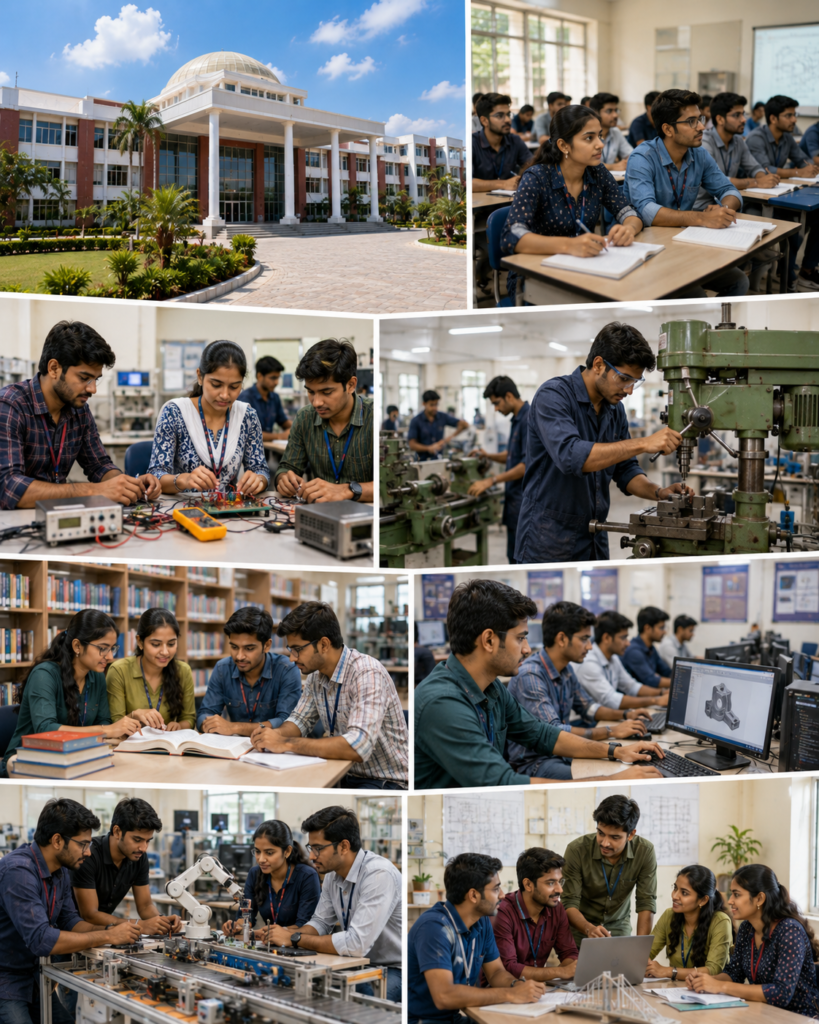
Leading Engineering Colleges in Madurai – A Complete Guide for Aspiring Engineers
Engineering remains one of the most sought-after fields of higher education in India, offering diverse career opportunities across industries such as technology, manufacturing, construction, healthcare, energy, and research. Choosing the right engineering college is an important step toward building a successful professional future.
Madurai, one of Tamil Nadu’s prominent educational centers, has developed a strong reputation for technical education. The city and its surrounding regions are home to several engineering institutions that contribute to the development of skilled professionals and future innovators. This guide provides valuable insights into engineering education, emerging trends, and factors students should consider when selecting an engineering college.
Why Choose Engineering as a Career?
Engineering is a dynamic field that combines scientific knowledge, creativity, and problem-solving skills to address real-world challenges.
Benefits of pursuing engineering include:
- Diverse career opportunities
- Strong earning potential
- Global employment prospects
- Opportunities for innovation
- Continuous learning and growth
- Contribution to technological advancement
- Entrepreneurial possibilities
Engineers play a crucial role in shaping modern society through advancements in infrastructure, technology, communication, healthcare, and sustainability.
Popular Engineering Disciplines
Engineering education offers multiple specializations, allowing students to align their studies with their interests and career goals.
Computer Science and Engineering
One of the fastest-growing branches, focusing on:
- Software development
- Artificial intelligence
- Machine learning
- Data science
- Cybersecurity
- Cloud computing
With digital transformation impacting every industry, computer science graduates are in high demand.
Mechanical Engineering
Mechanical engineering involves the design, analysis, and manufacturing of machines and systems.
Career areas include:
- Automotive industry
- Aerospace engineering
- Robotics
- Manufacturing
- Industrial automation
This branch remains a foundation of modern industrial development.
Civil Engineering
Civil engineers contribute to infrastructure development through projects such as:
- Buildings
- Bridges
- Roads
- Water systems
- Urban planning
Growing urbanization continues to create opportunities in this field.
Electrical and Electronics Engineering
This discipline focuses on power systems, electrical equipment, and electronic technologies.
Key sectors include:
- Power generation
- Renewable energy
- Electronics manufacturing
- Automation
- Telecommunications
Electronics and Communication Engineering
Students learn about communication technologies, embedded systems, and electronic devices.
Career opportunities exist in:
- Telecommunications
- Networking
- Consumer electronics
- Semiconductor industries
Features of Modern Engineering Education
Engineering education has evolved significantly in recent years.
Industry-Oriented Learning
Institutions increasingly focus on practical learning experiences through:
- Laboratory sessions
- Industry projects
- Internships
- Workshops
- Technical competitions
These opportunities help students bridge the gap between theory and practice.
Research and Innovation
Engineering colleges encourage innovation through:
- Research projects
- Startup incubation programs
- Technology development initiatives
- Product design competitions
Research exposure enhances critical thinking and problem-solving abilities.
Digital Learning Technologies
Technology-enabled learning environments now include:
- Virtual laboratories
- Simulation software
- Online learning platforms
- Collaborative digital tools
Digital resources improve accessibility and learning effectiveness.
Skills Every Engineering Student Should Develop
Success in engineering depends on more than technical knowledge alone.
Problem-Solving Ability
Engineers must analyze challenges and develop practical solutions.
Communication Skills
Effective communication is essential for:
- Team collaboration
- Project presentations
- Client interactions
- Leadership roles
Teamwork and Collaboration
Modern engineering projects often involve multidisciplinary teams working together toward common goals.
Adaptability
Rapid technological advancements require engineers to continuously update their skills and knowledge.
Importance of Internships
Internships provide valuable real-world experience and help students understand industry expectations.
Benefits include:
- Practical exposure
- Professional networking
- Skill enhancement
- Career exploration
- Improved employability
Many employers value candidates with hands-on industry experience.
Career Opportunities After Engineering
Engineering graduates can pursue careers in various sectors.
Private Sector Opportunities
Common industries include:
- Information technology
- Manufacturing
- Construction
- Automotive
- Telecommunications
- Energy
- Healthcare technology
Government Employment
Engineers can also explore opportunities in:
- Public sector enterprises
- Government departments
- Infrastructure projects
- Research organizations
Entrepreneurship
Many engineering graduates launch startups and technology ventures, contributing to innovation and economic growth.
Higher Education and Research
Students interested in specialization may pursue:
- Postgraduate studies
- Research programs
- International education opportunities
- Academic careers
Advanced education often opens doors to leadership and research-oriented roles.
Factors to Consider When Choosing an Engineering College
Selecting the right institution requires careful evaluation.
Academic Quality
Students should assess:
- Curriculum relevance
- Faculty expertise
- Academic support systems
- Learning methodologies
Infrastructure
Modern engineering education benefits from access to:
- Laboratories
- Libraries
- Research facilities
- Technology centers
- Innovation labs
Industry Exposure
Colleges with strong industry connections often provide better internship and training opportunities.
Placement Support
Career guidance and placement assistance can help students transition successfully into professional roles.
Student Development Activities
Participation in technical clubs, competitions, seminars, and workshops contributes to overall growth.
Emerging Trends in Engineering
The engineering landscape continues to evolve rapidly.
Artificial Intelligence and Machine Learning
AI technologies are transforming industries ranging from healthcare to finance.
Renewable Energy
Growing demand for sustainable solutions is creating opportunities in clean energy technologies.
Robotics and Automation
Automation continues to reshape manufacturing and industrial processes.
Internet of Things (IoT)
Connected devices are revolutionizing how people interact with technology.
Sustainable Engineering
Environmental sustainability is becoming a key focus area across engineering disciplines.
Madurai as an Educational Destination
Madurai has established itself as an important center for higher education in Tamil Nadu. The city offers access to engineering programs, research opportunities, technical training, and a supportive academic environment.
Its combination of educational institutions, industry connections, and student-friendly infrastructure makes it an attractive destination for aspiring engineers from across the region.
Conclusion
Engineering education provides students with the knowledge, skills, and opportunities needed to succeed in a technology-driven world. By choosing a college that emphasizes academic excellence, practical learning, innovation, and career development, students can build a strong foundation for long-term success.
As engineering continues to drive technological progress and economic development, the demand for skilled professionals remains strong. For students in Madurai and beyond, pursuing engineering can be the beginning of an exciting and rewarding career journey.